High-Tg PCB & High Temperature PCB Ultimate Guide
Table of Contents
In the rapidly evolving landscape of electronics, the demand for devices that can perform reliably under extreme conditions is constantly increasing. From automotive engines to aerospace systems and industrial machinery, electronic components are frequently subjected to elevated temperatures and significant thermal stress. This environment poses a considerable challenge for conventional Printed Circuit Boards (PCBs), which can degrade, delaminate, or fail when pushed beyond their thermal limits. This is where high-Tg PCB and high temperature PCB become indispensable.
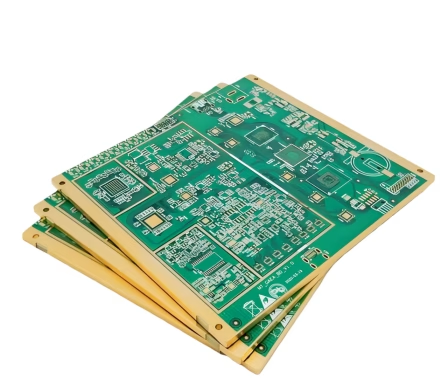
These specialized circuit boards are engineered to maintain their structural integrity and electrical performance even when exposed to prolonged high heat. They are crucial for ensuring the longevity and reliability of electronics in harsh operating environments, preventing costly failures and ensuring consistent performance. This guide will delve into the fundamental concepts, materials, manufacturing processes, and diverse applications of these robust PCB solutions.
1. Understanding Glass Transition Temperature (Tg)
The defining characteristic of a high-Tg PCB is its higher glass transition temperatures (Tg). Tg is a critical thermal property of the PCB’s dielectric material (the substrate, typically a resin like epoxy). It represents the temperature at which the PCB substrate transitions from a rigid, glassy state to a softer, rubbery state. Below the Tg, the material is stiff and stable; above it, it becomes more pliable , loses some mechanical strength, and its coefficient of thermal expansion (CTE) significantly increases.
For standard FR-4 PCBs, the Tg typically ranges from 130°C to 140°C. However, in applications where operating temperatures frequently exceed this range, or where processing temperatures during manufacturing are higher, a standard FR-4 board can become unstable. This instability can lead to issues such as delamination, pad lifting, and ultimately, device failure. High-Tg PCB material, on the other hand, boasts a Tg value of 170°C or higher, providing superior thermal resistance and stability. This elevated Tg ensures that the board remains rigid and stable even under more intense thermal loads, which is vital for the reliable operation of high-power electronics and other demanding applications.
2. Why High-Tg PCB and High Temperature PCB are Essential?
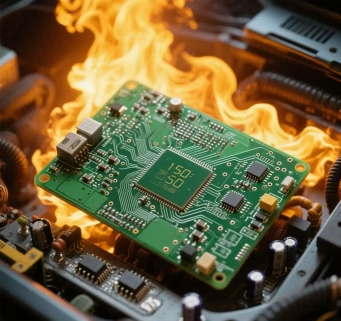
The need for high-Tg PCB and high temperature PCB board stems directly from the growing complexity and power density of modern electronics. Several factors drive this necessity:
- Increased Power Consumption:More powerful processors, LEDs, and power management ICs generate significant heat.
- Miniaturization:Components are packed more densely, leading to localized hot spots and reduced thermal dissipation areas.
- Harsh Operating Environments: Automotive under-the-hood applications, industrial control systems, aerospace electronics, and down-hole drilling equipment are exposed to continuously high temperatures.
- Lead-Free Soldering:The transition to lead-free soldering processes requires higher reflow temperatures (typically 240-260°C), which can stress standard PCB materials.
- Enhanced Reliability and Longevity:For critical applications, avoiding thermal stress-induced failures is paramount to ensure long-term operational integrity.
By using materials with higher Tg values, these PCBs can withstand the thermal cycles of manufacturing (like soldering) and the operational heat generated by components without compromising their structural integrity or electrical performance. This directly translates to improved product reliability and extended operational life.
3. What are the Key High-Tg PCB Materials?
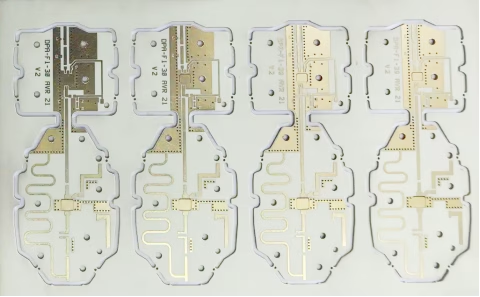
The selection of the right material is paramount for manufacturing a robust high temperature PCB. These materials offer superior thermal performance compared to conventional FR-4. Common high Tg materials include:
- High-Tg FR-4:This is an enhanced version of the standard FR-4, formulated with resins that achieve a Tg of 170°C or higher. It offers a cost-effective upgrade for many applications without drastically changing manufacturing processes.
- Polyimide:Known for its excellent thermal stability (Tg typically above 200°C), mechanical strength, and chemical resistance. Polyimide PCBs are ideal for extremely high-temperature applications, though they are generally more expensive than FR-4.
- BT Epoxy (Bismaleimide Triazine):Offering a Tg typically around 200-220°C, BT epoxy provides superior thermal performance, high-frequency characteristics, and CAF (Conductive Anodic Filament) resistance, making it suitable for high-reliability applications.
- Ceramic/Teflon (PTFE):While not traditional PCB laminates, ceramic and PTFE substrates are used for specific high-frequency and extremely high-temperature applications due to their exceptional thermal stability and low dielectric loss.
- PPO (Polyphenylene Oxide):These materials offer excellent electrical properties at high frequencies and good thermal performance, often found in high-speed digital and RF applications.
The choice of material depends on a balance of thermal requirements, electrical performance needs (e.g., Dk/Df for high frequency), mechanical strength, and cost constraints.
4. Manufacturing Considerations for High Temperature PCBs
High temperature PCB manufacturing requires specialized processes and careful attention to detail due to the unique properties of high-Tg materials. Some critical considerations include:
- Material Handling and Storage:High-Tg laminates can be more brittle or have different moisture absorption characteristics than standard FR-4, requiring specific storage conditions.
- Drilling:High-Tg materials are often harder and more abrasive, necessitating higher drill speeds, specific drill bit geometries, and more frequent bit replacement to prevent smearing and ensure clean holes.
- Lamination Cycle:The lamination process requires precise control of temperature and pressure to achieve proper resin flow and adhesion. High-Tg materials often demand higher lamination temperatures and longer cure cycles.
- Plating:Electroplating processes need to ensure uniform copper deposition within vias and on surfaces, especially critical with thicker substrates and challenging material properties.
- Thermal Management During Assembly:Even with high-Tg PCBs, proper thermal profiling during reflow soldering is essential to prevent thermal shock and ensure reliable solder joints, particularly with lead-free solders.
Manufacturers specializing in high-Tg PCB production possess the expertise and equipment to handle these materials effectively, ensuring the final product meets stringent quality and performance standards.
5. Applications of High-Tg PCB and High Temperature PCB
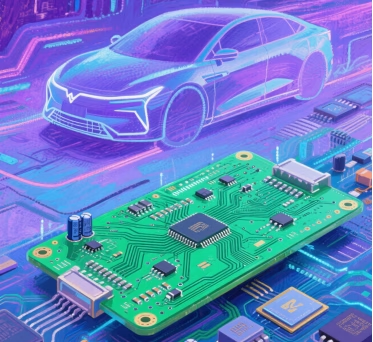
The robust nature of high-Tg and high temperature PCB applications makes them indispensable across a wide array of industries where thermal reliability is non-negotiable. Some key application areas include:
- Automotive Electronics:Engine control units (ECUs), transmission controls, lighting systems (e.g., LED headlights), and other modules located near heat sources.
- Aerospace and Defense:Avionics, radar systems, power supplies for satellites, and communication equipment that must withstand extreme thermal cycling and high operational temperatures.
- Industrial Control Systems:Power supplies, motor drives, process control equipment, and machinery operating in hot factory environments.
- High-Power Electronics:Inverters, converters, power amplifiers, and LED lighting fixtures where components generate significant heat during operation.
- Medical Devices:Imaging equipment and diagnostic tools that may experience high temperatures internally or require sterilization.
- Networking and Telecommunications:High-speed routers, servers, and base stations where high component density leads to elevated temperatures.
These applications leverage the enhanced thermal stability to prevent board degradation, maintain signal integrity, and ensure the long-term functionality of critical electronic systems.
6. Benefits and Challenges of High-Tg PCB
The adoption of high-Tg and high temperature PCBs brings numerous benefits, but also presents certain challenges:
Benefits:
- Enhanced Reliability:Significantly reduces the risk of delamination, trace damage, and component failure due to thermal stress.
- Improved Longevity:Extends the operational life of electronic devices, especially in harsh environments.
- Higher Performance:Maintains stable electrical properties over a wider temperature range, ensuring consistent circuit performance.
- Compatibility with Lead-Free Soldering:Better withstands the higher temperatures required for lead-free assembly.
- Increased Power Density:Allows for more densely packed components and higher power dissipation without compromising board integrity.
Challenges:
- Higher Cost:High-Tg materials and specialized manufacturing processes often result in higher production costs compared to standard FR-4.
- Processing Difficulty:Some high-Tg materials can be harder to drill and machine, potentially increasing manufacturing time and tool wear.
- Material Availability:While common, some very high-performance materials may have longer lead times.
- Design Complexity:Thermal design must still be carefully considered to prevent hotspots, even with robust materials.
7. PCB Thermal Management
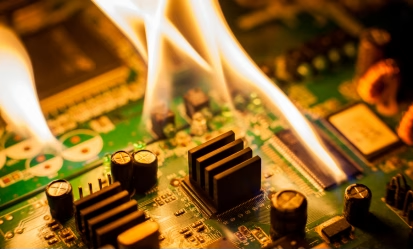
Even with high-Tg PCB and high temperature PCB board materials, effective PCB thermal management remains crucial. These materials provide a strong foundation, but they don’t eliminate the need for comprehensive thermal design strategies. Effective thermal management aims to dissipate heat away from critical components and distribute it evenly across the board to prevent localized overheating. This can involve:
- Copper Weight and Plane Design:Thicker copper layers and extensive ground/power planes act as heat sinks and pathways.
- Thermal Vias:Vias strategically placed under hot components to transfer heat to other layers or external heat sinks.
- Heat Sinks and Fans :External cooling solutions to actively remove heat from the system.
- Component Placement:Arranging heat-generating components away from heat-sensitive ones or distributing them to avoid concentrated hot spots.
- Specialized Substrates:Beyond standard laminates, materials with higher thermal conductivity (e.g., ceramic-filled substrates, aluminum core PCBs) can be used for extreme cases.
Combining high-Tg materials with smart thermal management techniques ensures optimal performance and reliability for the most demanding electronic systems.
8. High-Tg PCB and High Temperature PCB FAQs
The main difference lies in the glass transition temperature (Tg). High-Tg PCBs have a Tg of 170°C or higher, while standard FR-4 PCBs typically have a Tg between 130°C and 140°C. This higher Tg makes the high-Tg board more thermally stable and resistant to delamination at elevated temperatures.
Lead-free soldering processes require higher reflow temperatures (typically 240-260°C) than traditional tin-lead soldering. Standard FR-4 PCBs can be thermally stressed or even damaged at these temperatures. High-Tg materials withstand these higher processing temperatures without compromising their structural integrity.
No, high-Tg materials improve the PCB’s inherent thermal resistance, but they don’t eliminate the need for comprehensive thermal management. They provide a more robust base, allowing the board to operate reliably at higher temperatures, but active or passive cooling solutions (like heat sinks or thermal vias) are still essential for dissipating excessive heat and maintaining component temperatures within their safe operating limits.
Generally, yes. The specialized resins and manufacturing processes required for high-Tg PCB material tend to increase production costs compared to standard FR-4. However, the added cost is often justified by the increased reliability, longevity, and performance in high-temperature or high-power applications.
9. Summary
High-Tg PCB and high temperature PCB are critical enablers for modern electronics operating in demanding thermal environments. By utilizing specialized high-Tg PCB material with elevated glass transition temperatures, these boards maintain their structural integrity and electrical performance even under significant heat. They address the challenges posed by increased power density, miniaturization, and the shift to lead-free soldering, ensuring the reliability and longevity of devices across diverse sectors like automotive, aerospace, and industrial controls.
While offering superior thermal stability, their manufacturing requires precise processes, and careful consideration must be given to material selection, drilling, and lamination. Coupled with effective PCB thermal management strategies, high-Tg and high temperature PCBs provide robust solutions that prevent thermal failures and support the continuous innovation in high-performance and high-reliability electronics.
Key Takeaways
- High-Tg PCBshave a higher glass transition temperature (Tg ≥ 170°C) than standard FR-4, making them thermally stable at elevated temperatures.
- They are essential for applications involving high operating temperatures, high power density, or lead-free soldering processes.
- Key materials include enhanced FR-4, Polyimide, and BT Epoxy, chosen based on thermal, electrical, and cost requirements.
- Manufacturing high temperature PCBs demands specialized techniques for drilling, lamination, and plating.
- Applications span automotive, aerospace, industrial, and high-power electronics, where reliability under heat is paramount.
- While more expensive, their benefits in terms of reliability and longevity often outweigh the costs.
- EffectivePCB thermal management is still crucial, even with high-Tg materials, to ensure optimal performance.
Contact us
WhatsApp: +86-13570802455
Wechat: +86-13570802455
Email: [email protected]